
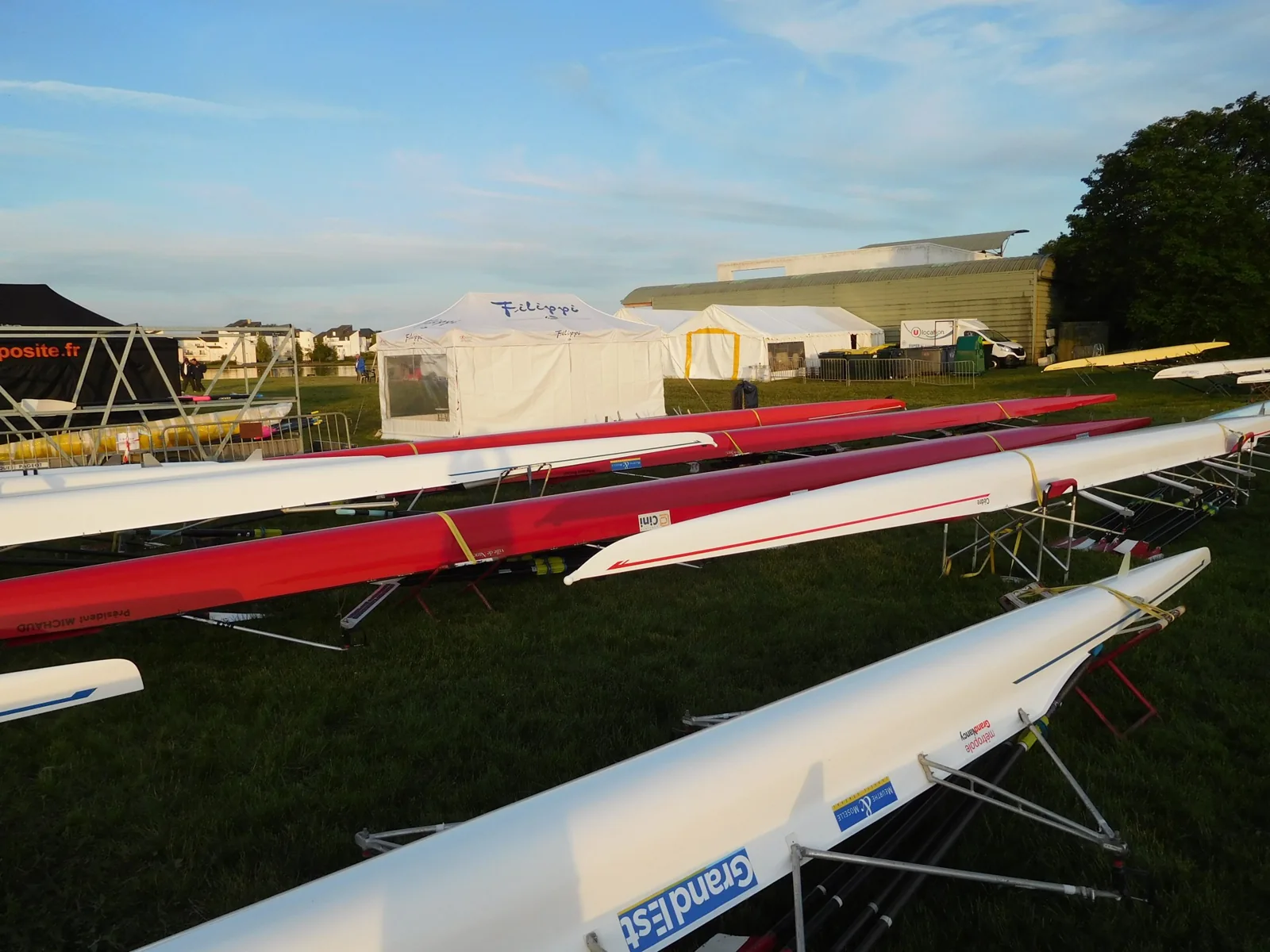
An inter-company challenge can combine the energy of a shared objective with the pleasure of meeting other groups. The aim is not simply to compare results: it is to build an experience in which teams understand what they are being invited to take part in. In rowing, coordination gives mutual support a particular role. The boat moves forward with a group, not merely the sum of independent efforts. Esprit d’Équipe Rowing offers inter-company challenges and regattas to take this dynamic further. No precise programme has been provided at this stage. This guidance therefore helps you prepare the right questions, without inventing rules, distances, rankings or participation conditions.
What shared objective should you give the challenge?
Before discussing organisation, define what the event should set in motion. Do you want to create an encounter between companies, give your crews a shared commitment or build on an introductory experience? These intentions are not identical. They must be explained clearly to companies and participants.
A shared objective does not necessarily mean making victory the sole criterion for success. Esprit d’Équipe Rowing’s positioning makes room for people, enjoyment and high standards. How these dimensions fit together should be discussed with Nicolas Coassin. Avoid announcing a specific competitive structure before it has been confirmed. Coherent communication presents the intention and the approved elements, while honestly indicating what remains to be developed in the proposal.
How can you check that the format suits the participants?
The entry conditions for challenges are not detailed in the supplied brief. The accessibility of the discovery day does not imply that all regattas or challenges have the same prerequisites. Describe your employees’ experience and the expectations of the companies involved.
The organiser will need to confirm participation conditions, supervision and arrangements appropriate to the project. No technical level, prior training or specific test is stated here. It is also necessary to clarify capacity and locations rather than infer them from the number of interested companies. The project becomes more reliable when it starts from actual groups and approved arrangements. Participants can then receive consistent information, without an unsupported promise of universal accessibility.
Why clarify the rules before communicating?
Understood rules allow participants to know what they are sharing and what is expected of them. In an encounter between companies, this clarity also prevents everyone arriving with a different idea of the challenge. The programme, any criteria and responsibilities must be confirmed before being communicated.
Do not fill gaps in the information with assumed conventions: no distance, number of races, ranking system or prize has been provided for Esprit d’Équipe Rowing. These details are discussed while preparing your proposal. The role of the company organising its participation is to ask questions, then relay the exact answers. A provisional programme must be identified as such. This discipline protects trust between participants, companies and the organiser.
Which practical points need confirmation?
Duration, participant numbers, location, season, clothing, equipment, safety arrangements and insurance must be specified. Weather and cancellation conditions also deserve an explicit discussion. No postponement or replacement can be presented as planned without confirmation.
Esprit d’Équipe Rowing is based in Lausanne and operates in French-speaking Switzerland. This does not mean that a challenge automatically takes place on a particular lake or with a specific partner club. Logistical information must be consistent for all companies involved. Also define, within your own organisation, who gathers questions and who passes on approved information. This internal coordination does not replace the organiser’s responsibilities, but it avoids contradictory versions and commitments based on assumptions.
How can you keep the human experience at the centre?
A challenge can generate strong energy. It is useful to remember that team spirit is expressed as much in the way people participate as in any eventual result. Listening, coordination and mutual support remain essential to the rowing approach presented by Esprit d’Équipe Rowing.
After the highlight, a group debrief can open up discussion about what happened. Its arrangements are detailed in the proposal. Participants can talk about how they found a shared objective, communicated or helped their crew. Do not turn this into a professional ranking of employees or companies. The value of the moment also lies in the encounter and the shared memory. The organisation is more coherent when it makes room for this dimension, without claiming that every competition will automatically produce lasting cohesion.
What are the key takeaways?
Have the regatta rules already been published?
No. Rules, the programme and participation conditions are clarified in the proposal.
Can we offer the challenge to beginners?
Participation conditions are discussed with Nicolas Coassin. Describe your group’s level before choosing this format.
Which format should you explore for your team?
Discover the format linked to this reflection, then request a proposal for your company.
Read the frequently asked questions to prepare for your project.